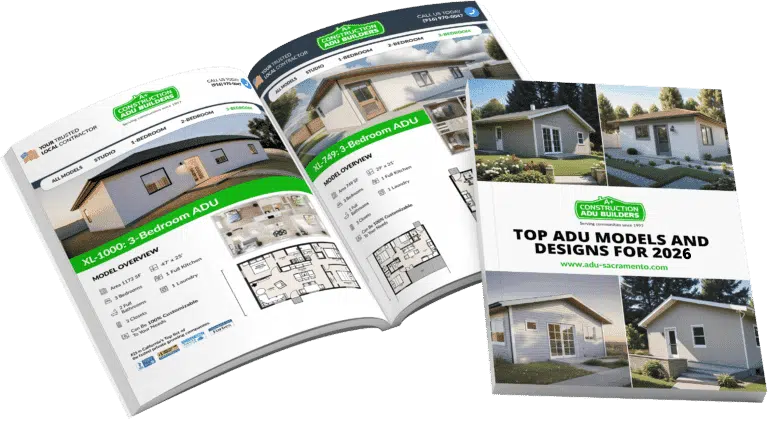
A link to download your FREE brochure will be in your inbox in 3 minutes
The final price may vary based on project specifics.
To get a free accurate quote tailored to your needs, book a consultation with us today!
The price per square foot provided is an average and may vary depending on project-specific details such as materials, location, complexity, and other factors. Actual costs may differ from the average provided.
It is recommended to obtain a detailed quote based on the specific requirements of your project.
Please note that the monthly payment displayed on this page is an estimate and is subject to variation based on the selected loan product, applicants credit score, loan amount, and other financial details. Actual monthly payment may differ from the estimate provided.
It is recommended to seek advice from a financial advisor or loan officer to obtain precise payment information tailored to individual circumstances.
 Your Trusted
Local Contractor
Your Trusted
Local Contractor
 Serving Communities Since 1997
Thinking about a backyard home, but stuck on how to build it?
In Sacramento right now you’ll hear three buzzwords over and over:
Modular, prefab, and stick-built ADUs.
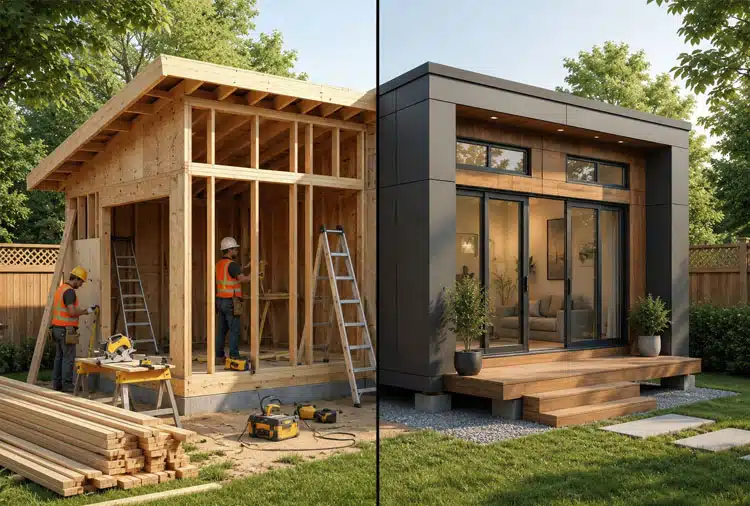
They all get you a finished accessory dwelling unit, but they’re very different when it comes to:
As a design–build ADU contractor in the Sacramento area, A+ Construction ADU Builders works with homeowners who are comparing all three options.
This guide breaks down what each type actually means, how they behave under California & Sacramento ADU rules, and how to choose the right approach for your property.
These terms get mixed together a lot, so let’s sort them out.
Stick-built ADU
Prefab ADU (umbrella term)
“Prefab” just means prefabricated: parts are made in a factory, then brought to your lot.
Under that umbrella you usually have:
In marketing, people often say “modular vs prefab vs stick-built,” but technically modular is a type of prefab. In this article, we’ll treat them as separate “buckets” because they feel different from a homeowner’s perspective.
The good news: under California’s ADU laws and local ordinances, all three methods are allowed in the Sacramento region—as long as they meet:
Key statewide perks that apply no matter which type you choose:
In Sacramento County and the City of Sacramento, ADUs can be stick-built or factory-built; both jurisdictions focus on code compliance rather than the construction method.
So the real question becomes less “Is this legal?” and more:
“Which type fits my budget, lot, timeline, and long-term goals best?”
What a modular ADU is
Pros of modular ADUs
Cons of modular ADUs
Tight alleys, low wires, trees, narrow streets, or steep slopes can make craning impossible or very expensive.
You’re usually picking from a small menu of layouts; structural changes are difficult once the design is locked.
Lenders and appraisers are most comfortable with traditional, stick-built housing; modular is accepted but sometimes requires extra documentation.
When modular makes sense in Sacramento
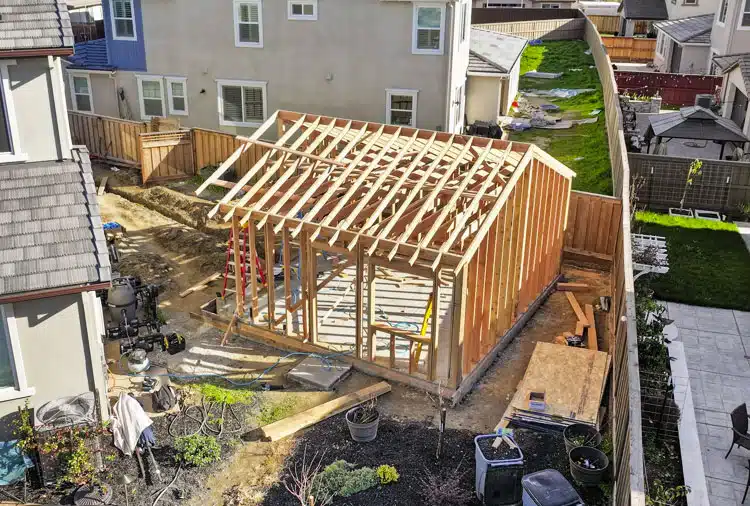
Here we’re talking about factory-built units that are:
A+ Construction ADU Builders has written extensively about these styles vs stick-built on their own blog.
Pros of prefab ADUs
Cons of prefab ADUs
Delivery, crane rental, foundation, utilities, and local permit work are often not included in the “from $X” marketing price.
Most manufacturers lock in structural layouts; you can tweak finishes, but not the bones.
Traditional, site-built ADUs typically appraise closer to standard housing; some lenders and buyers still view manufactured or factory units as less valuable or harder to finance.
When prefab makes sense in Sacramento
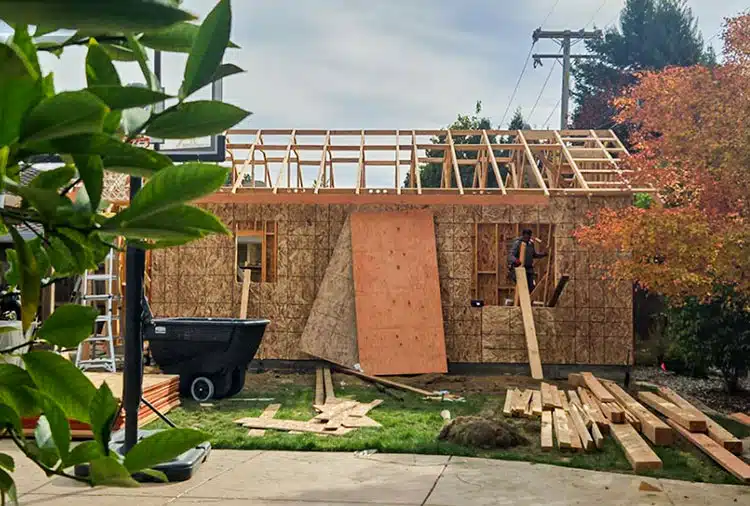
This is the classic “custom backyard home” that A+ Construction ADU Builders is best known for:
Pros of stick-built ADUs
Shape, rooflines, window placement, ceiling height, finishes—it’s all on the table. Perfect for matching your existing Sacramento home or neighborhood style.
Irregular lot? Trees you want to keep? Easements? Site-built ADUs can be tailored around constraints.
Because they’re constructed just like primary homes, lenders and appraisers understand them best, and buyers usually see them as higher quality and more “permanent” than many prefab units.
Cons of stick-built ADUs
On-site ADUs typically run several months of active construction, with inspections at every stage and possible weather delays.
Crews, materials, inspections = more activity in your backyard compared to a quick modular drop.
Custom design is powerful, but it also means you’ll be choosing…a lot: layout, windows, doors, cabinetry, tile, lighting, etc.
When stick-built is the best call
No matter which ADU type you choose, Sacramento has a few quirks to weigh:
Instead of pushing one method, A+ Construction ADU Builders focuses on what fits you:
Get a First Look at Real ADU Projects
 Copy Link
 Facebook
 Twitter
 LinkedIn
 WhatsApp