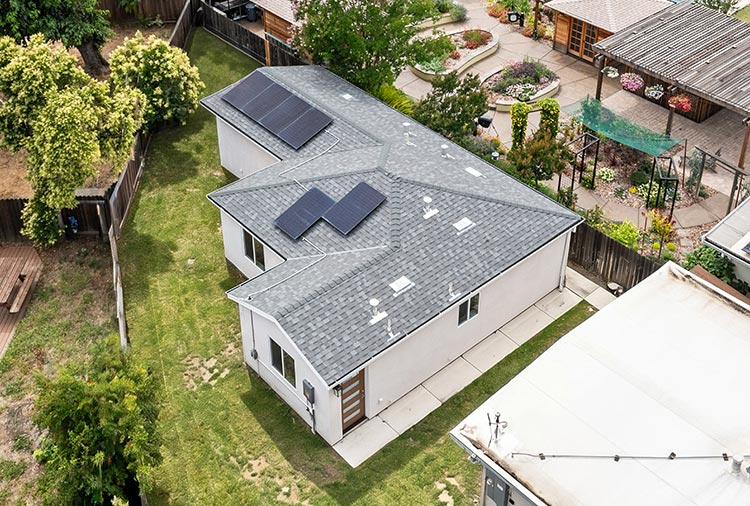
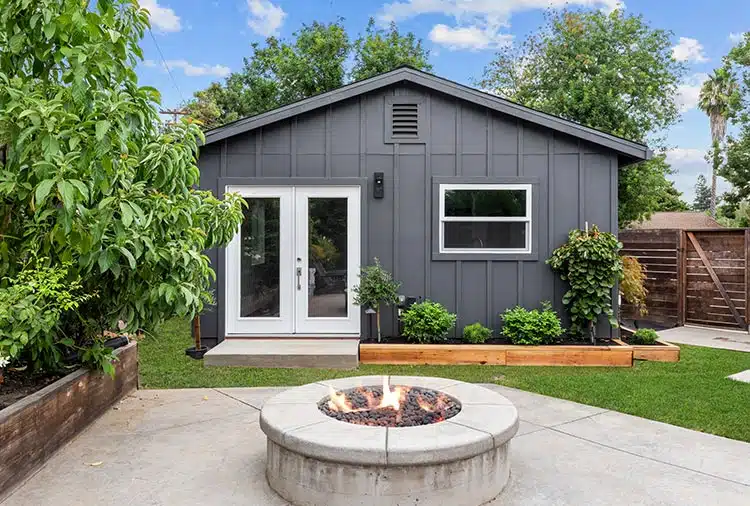
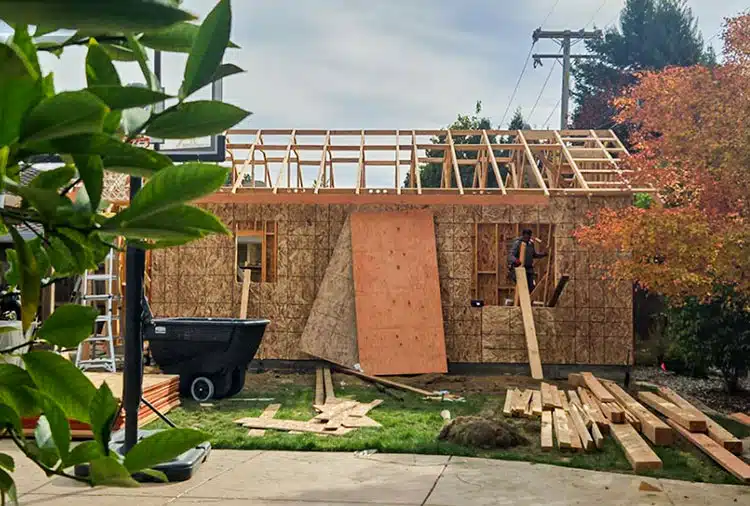
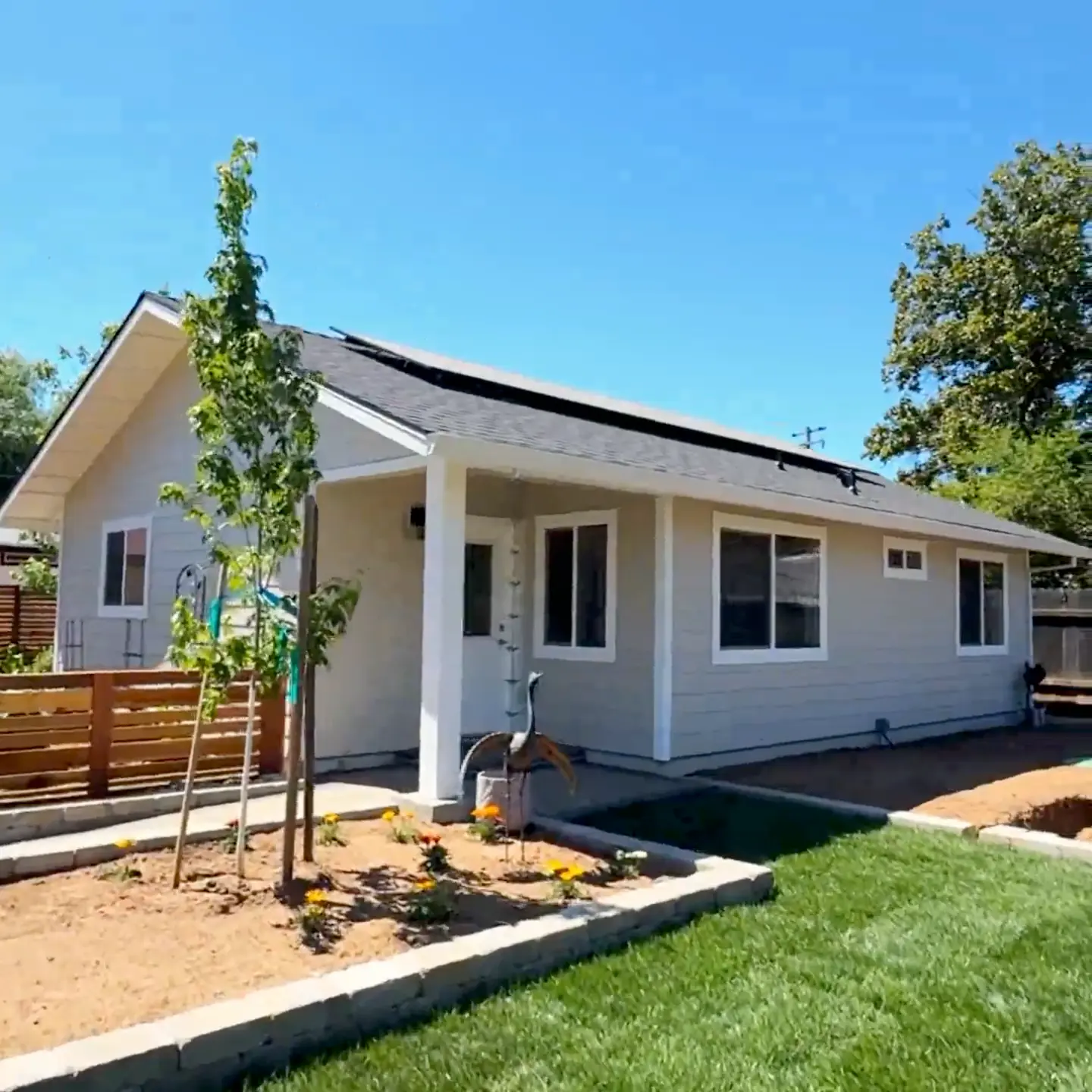
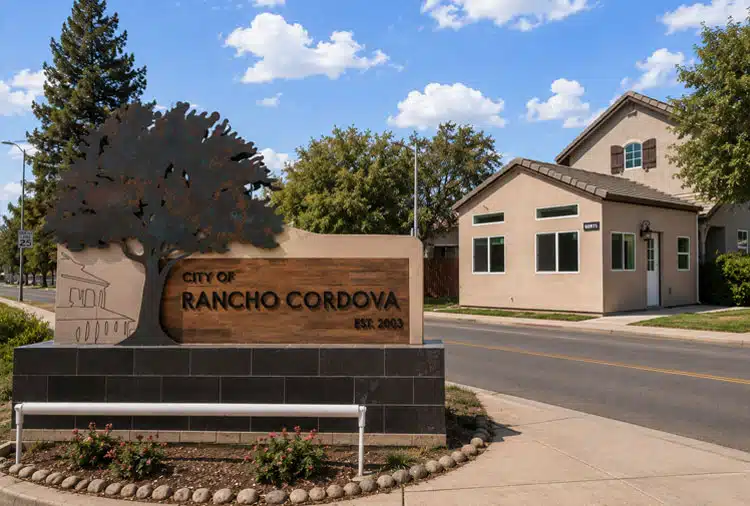
Rancho Cordova sits along Highway 50 between Sacramento and Folsom, with about 84,000+ residents and a mix of older suburbs, new master-planned communities, and employment centers along the American River.
With land getting tighter but housing demand staying strong, Accessory Dwelling Units (ADUs) are one of the most practical ways here to add housing, support family, and create rental income without buying another property. This guide mirrors the Sacramento article you showed earlier, but everything is tailored to Rancho Cordova in 2026.
What Is an ADU (and a JADU)?
A standard Accessory Dwelling Unit (ADU) in Rancho Cordova is a small, self-contained home on the same lot as a primary residence. It must:
- Be on a residential lot that has an existing or proposed primary dwelling
- Have its own kitchen, bathroom, sleeping area, and exterior entrance
- Be either detached, attached, or a conversion of existing space (like a garage or portion of the house)
A Junior ADU (JADU) is a special, smaller type of unit that:
- Is no more than 500 sq. ft.
- Is created within the existing single-family home or attached garage
- Has an efficiency kitchen and separate entrance
- May share a bathroom with the main house
- Requires owner occupancy in either the main home or the JADU
Why ADUs Make Sense in Rancho Cordova
Rancho Cordova is growing fast, with population climbing from about 79,000 in 2020 to 84,000+ by 2024. Housing demand and prices have followed: median home values are around $450,000+, and typical rents hover near or above $2,200/month depending on unit type.
ADUs are attractive here because they can:
- Generate steady rental income in a relatively high-rent market
- Provide on-site housing for parents, adult children, or caregivers while preserving privacy
- Increase property value by adding a fully legal second unit
- Make better use of backyards, side yards, and underused garages
State law and Rancho Cordova’s zoning code now make it much easier to add ADUs by-right, with standardized rules and fast ministerial approvals.
Can I Build an ADU in Rancho Cordova?
According to Housable’s summary (based on Rancho Cordova’s zoning and California ADU law):
- The property must have an existing or proposed primary dwelling.
- Single-family lots are generally allowed:
- 1 ADU (attached or detached), and
- 1 JADU if the property is owner-occupied.
- Multifamily properties (with at least two attached units) can add:
- Conversion ADUs inside existing non-habitable space (storage, boiler rooms, etc.), and
- Up to 2 detached ADUs, or more conversion units, subject to state ratios (1 conversion ADU per 4 existing units).
There is no minimum lot size specifically limiting ADUs in Rancho Cordova; even modest suburban lots can usually accommodate a small unit if setbacks and other standards are met.
Rancho Cordova ADU Laws & Regulations (2026)
Unit Types Allowed
On most residential lots, Rancho Cordova allows the standard California set of ADUs:
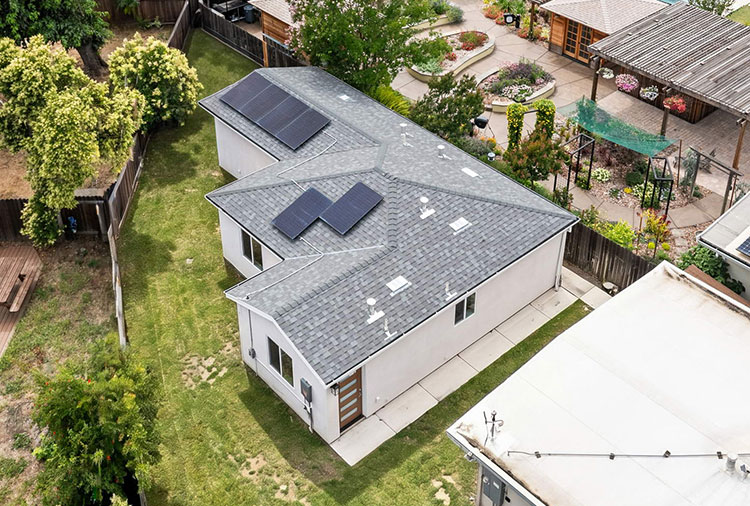
- Detached ADU – stand-alone backyard or side-yard cottage
- Attached ADU – an addition physically connected to the main home
- Garage / accessory structure conversion ADU – repurposing a legal existing garage or outbuilding
- Interior conversion ADU – using part of the existing house (e.g., rec room, bonus room) as a separate unit
- Junior ADU (JADU) – ≤500 sq. ft., entirely within the existing home or attached garage, with its own entrance and efficiency kitchen
Maximum Unit Size
Local practice, builder guidance, and state law together give these key size rules:
- Detached ADU (Rancho Cordova)
- A+ Construction ADU Builders and other local ADU specialists note that up to 1,200 sq. ft. is allowed for a detached ADU in Rancho Cordova, consistent with California’s common upper limit.
- State-guaranteed minimums (apply here as a floor):
- At least 800 sq. ft. ADU must be allowed on any qualifying lot, regardless of lot coverage or FAR, if height is ≤16 ft with 4-ft side/rear setbacks.
- Attached ADUs must be allowed up to:
- 850 sq. ft. for 0–1 bedroom
- 1,000 sq. ft. for 2+ bedrooms
- JADU
- Capped at 500 sq. ft. and fully within the existing primary residence or attached garage.
- Minimum size
- State law requires ADUs to be allowed down to at least 150 sq. ft., essentially a small studio, as long as building code is met.
In practice, most Rancho Cordova backyard ADUs fall in the 400–1,000 sq. ft. range, depending on lot depth and budget.
ADU Height Limits
For single-family properties, Housable and local builders outline the following typical height limits:
- Detached ADUs:
- Allowed to reach up to 16 ft in height by default.
- Attached ADUs:
- Can generally go up to 25 ft or match the height allowed for the primary home in that zoning district (often two stories).
State law also provides extra height flexibility on some lots:
- Near qualifying transit, or on lots with a two-story multifamily building, detached ADUs can reach 18 ft.
- Certain attached configurations can reach 25 ft where consistent with zoning.
Conversions of existing upper-story spaces usually can keep their existing height as long as the structure is legal and safe.
Setback Requirements
Rancho Cordova implements the standard California “small ADU” setback rules:
- New detached ADU (single-family or multifamily lot):
- Minimum 4 ft from side property lines
- Minimum 4 ft from rear property line
- Front and street-side setbacks:
- May be larger than 4 ft and usually must respect the primary zoning district’s front-yard requirements.
- However, state law prevents front setbacks from being used to block at least one 800-sq-ft ADU that otherwise fits the 4-ft side/rear and 16-ft height envelope.
- Conversions of existing structures:
- A legal existing garage or accessory structure can typically be converted to an ADU without changing its current setbacks, even if it’s closer than 4 ft to a lot line.
There is no minimum lot size for ADU eligibility; the key is whether you can fit the unit and still meet setbacks and building-code requirements.
Parking Requirements
Housable and Rancho Cordova-focused builder guidance show that the city follows the state parking framework closely:
- Base rule:
- Required parking for an ADU may be no more than 1 off-street space per bedroom.
- **But there are many exemptions where no parking can be required for the ADU, including when:
- The ADU is within ½ mile walking distance of public transit (bus or light rail).
- The ADU is located within the existing home or is a conversion of an existing garage or accessory structure.
- The ADU is part of a multifamily building under the multifamily ADU standards.
- An existing garage, carport, or covered parking is demolished or converted for the ADU — those spaces do not have to be replaced.
A+ Construction ADU Builders also notes that no additional parking is required when the ADU is created from existing space or is within ½ mile of transit, matching the exemptions above.
Building Permits and Fees
To build an ADU in Rancho Cordova, you’ll work with the city’s Planning Division and Building & Safety Division:
- Planning checks:
- Zoning, setbacks, height, lot coverage, and whether the proposal qualifies for ministerial ADU approval (no public hearing).
- Building & Safety reviews:
- Structural, electrical, plumbing, mechanical, and Title 24 energy compliance.
Timeline & process
- State law requires cities to approve or deny a complete ADU application within 60 days via a ministerial process.
- A+ Construction ADU Builders and other local builders estimate:
- 3–5 months for design and permitting, and
- 3–4 months for construction, depending on complexity.
Fees & impact fees
- Under California law, ADUs under 750 sq. ft. are exempt from local development impact fees (parks, traffic, etc.).
- Larger ADUs may pay impact fees proportional to their size relative to the main dwelling.
- You’ll still owe:
- Plan check and building permit fees
- Any utility connection or capacity charges required by local providers
Design Requirements
Rancho Cordova uses objective design standards embedded in its zoning code, plus general California building standards:
Key points:
- Architectural compatibility
- ADUs should be visually subordinate to the main house and use similar roof pitch, materials, and colors where feasible.
- Private entrance
- Each ADU and JADU must have an independent exterior entrance, not just a door off a shared hallway.
- Privacy & window placement
- Projects close to neighboring homes are expected to consider window placement, sill heights, and screening to reduce direct views into adjacent living spaces.
- Stories & massing
- Most detached ADUs are one story and limited by the 16-ft height cap; taller attached units must fit the underlying zoning height limit.
Regardless of design style, you must meet all applicable California Building Code and Energy Code (Title 24) provisions—egress windows, insulation, smoke/CO alarms, solar requirements for new dwellings, etc.
Utilities and Infrastructure
ADUs in Rancho Cordova must have safe, code-compliant utility connections, but the rules are fairly flexible:
- Water & sewer
- ADUs can often share existing service lines with the main house; in other cases, separate laterals and connection fees may be required, depending on utility capacity and configuration.
- Electricity & gas
- The unit can use the existing panel (if capacity allows) or get a panel upgrade or separate meter.
- Title24EZ emphasizes the need to size heating, cooling, and water-heating systems correctly and model them in the ADU’s energy calculations.
- Fire sprinklers
- State law says sprinklers are not required for an ADU if they aren’t required in the primary dwelling, and building an ADU cannot trigger a retrofit requirement for the existing home.
Utility trenching and panel upgrades can be a major cost driver, so most Rancho Cordova ADU projects evaluate these items very early in design.
Owner-Occupancy & Rental Rules
Standard ADUs (attached or detached)
- California’s AB 976 permanently prohibits cities and counties from requiring owner-occupancy for ADUs.
- Practically, this means in Rancho Cordova you may:
- Rent out both the main home and the ADU, or
- Live in either and rent the other.
- Rental terms:
- State law requires that ADUs approved under these statutes be rented for more than 30 days at a time; nightly, hotel-style vacation rentals are typically not allowed unless a separate local short-term-rental program specifically permits it.
Junior ADUs (JADUs)
- JADUs do still require owner-occupancy: the property owner must live in either the main home or the JADU, as reflected in the way JADUs are defined and deed-restricted in state law and local practice.
Property Taxes
When you add an ADU in Rancho Cordova (Sacramento County), your property taxes will go up—but only on the value of the new unit, not on your original base.
Here’s how it works:
- Proposition 13 caps the general property tax rate at 1% of assessed value, plus any voter-approved debt and special assessments.
- Sacramento County explains that tax bills generally equal 1% + local voter-approved debt rates, which vary by school and special districts.
- When you build an ADU:
- The existing home keeps its original base-year value.
- The ADU is treated as new construction and gets its own assessed value, added on top.
- A supplemental assessment (and often a one-time supplemental bill) is issued based on the difference between old value and new value.
In practical terms, many owners in Sacramento County end up paying roughly 1.1–1.3% of the ADU’s construction value per year in extra property tax once local bonds and assessments are included.
New ADU Laws in 2026 That Affect Rancho Cordova
Several statewide ADU reforms now shape how Rancho Cordova must treat ADU projects:
- No Owner-Occupancy for ADUs – AB 976
- Permanently bans owner-occupancy requirements for standard ADUs; only JADUs may require the owner to live on site.
- Pre-Approved ADU Plans – AB 1332
- By January 1, 2026, every city must provide a pre-approved ADU plan program and post those plans online.
- Applications using pre-approved plans must be processed faster (site-specific permits in about 30 days, general ADU permits in 60 days).
- Updated Height & Setback Flexibility – AB 2221 & related laws
- Requires cities to allow:
- 16-ft minimum height for detached ADUs on most lots
- 18-ft near transit or for two-story multifamily sites
- Up to 25-ft for some attached ADUs, depending on zoning
- Limits how front setbacks can be used to block an 800-sq-ft ADU.
- Unpermitted ADU Amnesty – AB 2533 & 2026 ADU Handbook
- Creates a pathway to legalize many ADUs built before January 1, 2020, as long as they can be brought up to health-and-safety standards, even if they miss some current zoning details.
- Streamlined Permitting & No Extra Street-Work – SB 1211, etc.
- Reinforces the 60-day permit deadline and curbs cities from requiring excessive street widening, curb, or other public-works upgrades just because you’re adding an ADU.
All of this pushes Rancho Cordova (and every other California city) toward faster, more predictable, pro-ADU processing.
Rancho Cordova ADU Laws: Key Takeaways
If you own property in Rancho Cordova in 2026, here’s the short version:
- Yes, you can almost certainly build an ADU on a residential lot with an existing or proposed home—there’s no minimum lot size barrier.
- On a typical single-family parcel, you may have:
- 1 full ADU (attached or detached, often up to 1,200 sq. ft.), and
- 1 JADU (up to 500 sq. ft. inside the home) if you choose to live on the property.
- Detached ADUs are typically 16 ft tall, with 4-ft side and rear setbacks; attached units can be taller within zoning limits.
- Parking is often waived, especially for ADUs near transit, smaller units, and conversions. Garage conversions do not require replacement parking.
- No owner-occupancy is required for ADUs, but JADUs still require the owner to live in the main home or the JADU, and ADUs must be rented for 30+ days (no nightly vacation rentals).
Property taxes increase only on the ADU’s new assessed value, usually about 1–1.3% of that value per year in Sacramento County.
 Your Trusted
Local Contractor
Your Trusted
Local Contractor
 Serving Communities Since 1997
 Copy Link
 Facebook
 Twitter
 LinkedIn
 WhatsApp