If you own a home in the Sacramento area, your biggest untapped asset might not be your house. It might be your backyard.
Thanks to California’s ADU laws and local programs in Sacramento City and County, it’s easier than ever to turn part of your lot into a legal backyard home that can generate steady rental income—without buying another property.
This guide walks you through, step by step:
- how ADU rentals work in Sacramento,
- what you can realistically earn,
- how the laws protect you as a small landlord, and
- what to do first if you’re thinking, “Can my backyard do this?”
What Counts as an ADU in Sacramento?
In both the City of Sacramento and Sacramento County, an Accessory Dwelling Unit (ADU) is:
- a secondary home on the same lot as a primary residence,
- with its own kitchen, bathroom, sleeping and living space,
- on a permanent foundation,
- with a separate exterior entrance.
It can be:
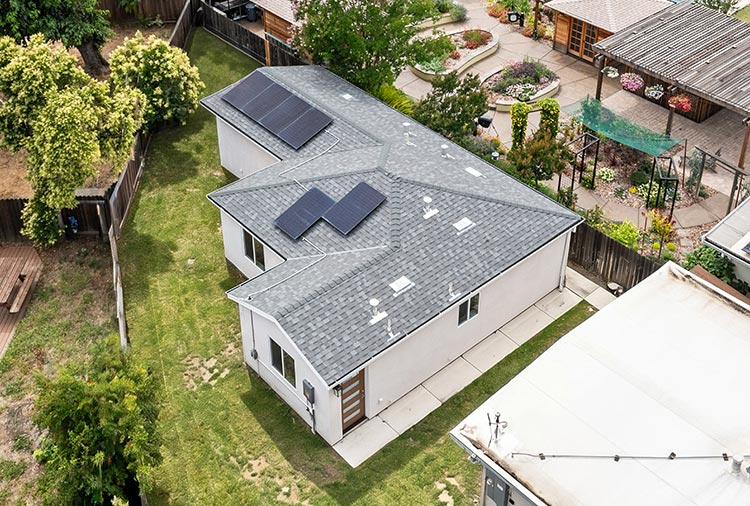
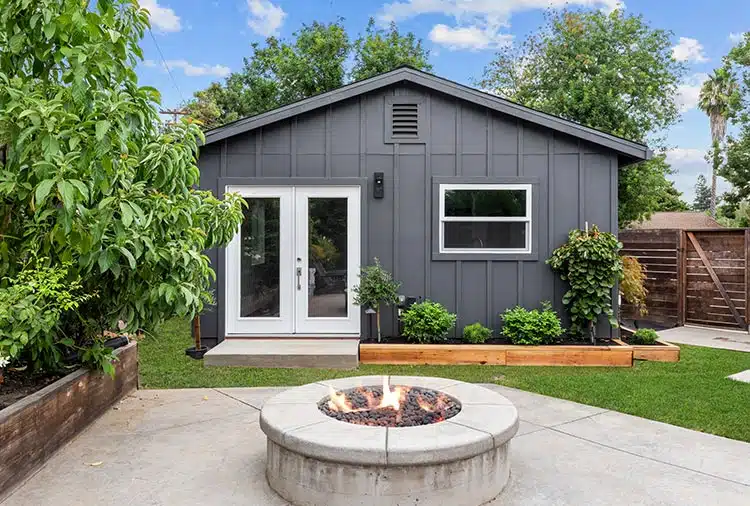
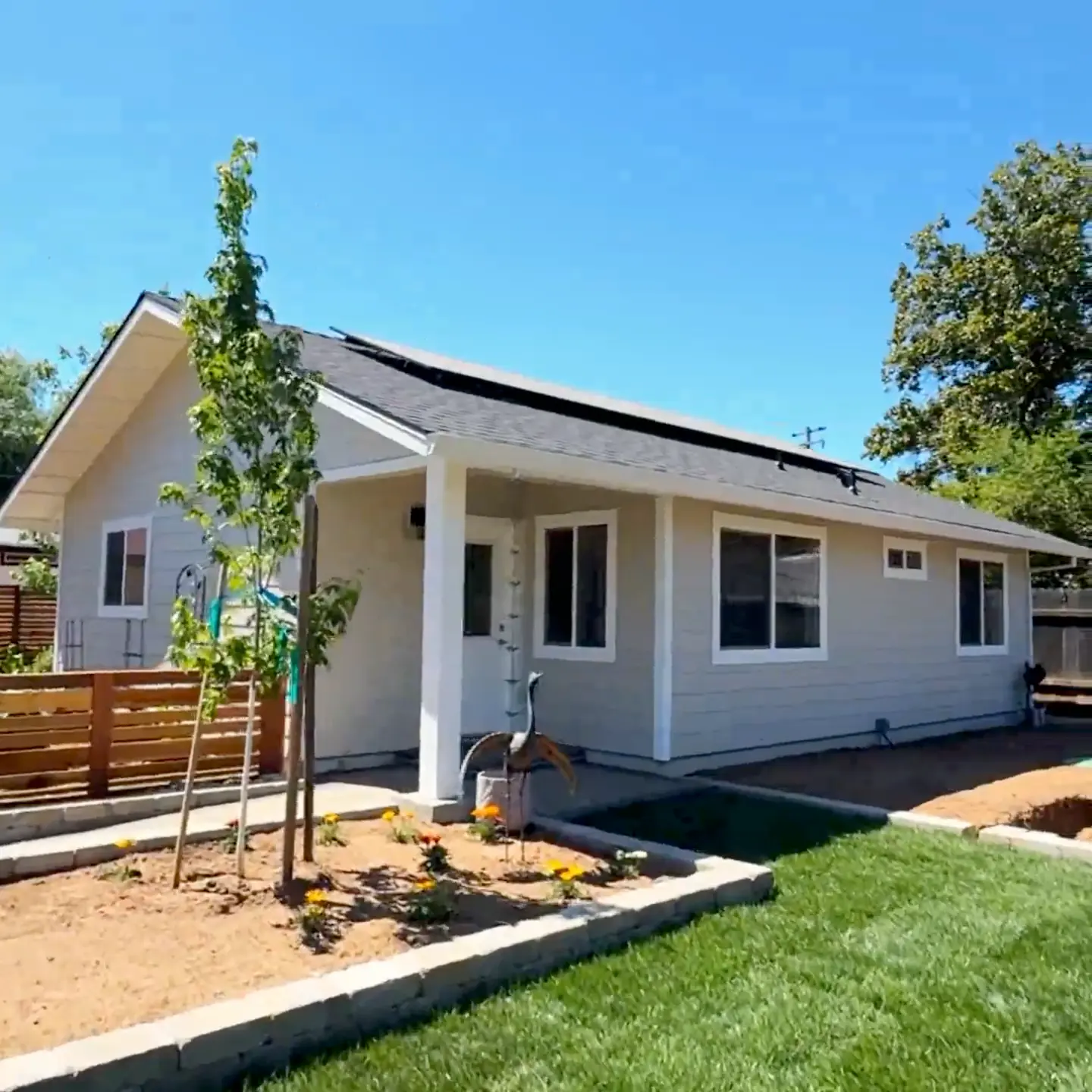
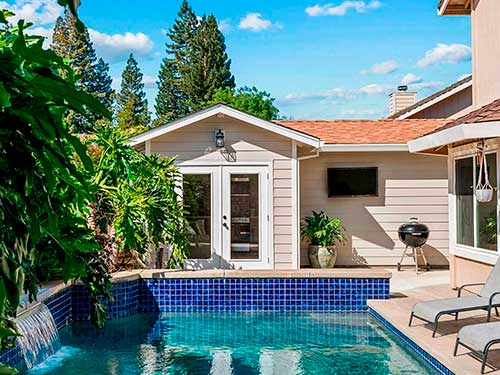
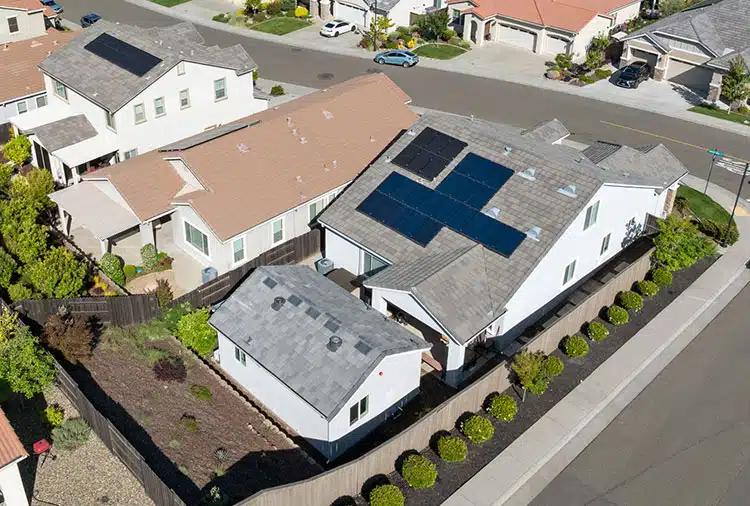
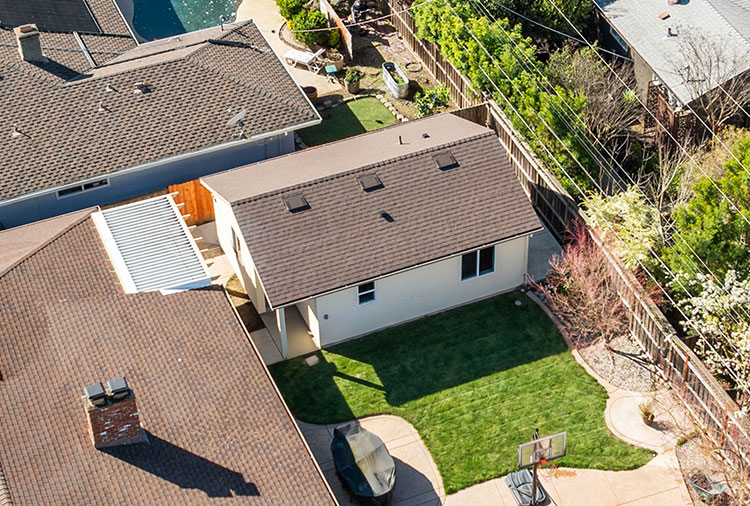
- Detached – backyard cottage / casita
- Attached – addition to your main house
- Garage conversion – turning an existing garage into a small home
- Interior conversion – carving a unit out of existing space
California has spent the last few years aggressively reforming law to encourage ADUs:
- Cities must allow at least one 800 sq.ft. ADU per lot, with 4 ft side & rear setbacks and reasonable height.
- Impact fees are prohibited for ADUs under 750 sq.ft. (huge savings).
- Owner-occupancy requirements are banned for most ADUs (AB 976) – you can rent both the house and the ADU.
That legal foundation is why ADUs have become such a powerful income tool for Sacramento homeowners.
ADUs Are Long-Term Rentals (Not Airbnbs)
Before we talk numbers, one important point:
In most Sacramento jurisdictions, ADUs must be rented for 30+ days at a time:
- California ADU law aims to create permanent housing, not vacation rentals.
- Sacramento and Sacramento County both treat ADUs as long-term rentals only in most residential zones.
So when we say “steady income,” we’re talking about monthly rent, not nightly Airbnb-type stays.
The upside: long-term tenants = more predictable cash flow, less turnover, and less management hassle.
How Much Can You Earn Renting an ADU in Sacramento?
Exact numbers depend on location, size, and design, but we can look at realistic ranges.
Recent market data (2025) shows that in the Sacramento area:
- Studio / micro rentals often run around $1,200–$1,500/month in decent neighborhoods.
- 1-bedroom units commonly land around $1,500–$1,900+/month depending on area and finishes.
- 2-bedroom units can often reach $1,900–$2,400+ and more in higher-demand suburbs.
A new, well-designed ADU usually sits at the top end of these bands because:
- it’s new construction,
- often has in-unit laundry, and
- feels like a small house, not an apartment in a big complex.
Ballpark monthly rent ranges for ADUs
These are approximate monthly ranges for a nice ADU in a typical Sacramento-area neighborhood:
- Garage conversion studio (250–400 sq.ft.)
→ $1,200–$1,500+
- 1-bedroom ADU (400–750 sq.ft.)
→ $1,600–$2,000+
- 2-bedroom ADU (750–1,000+ sq.ft.)
→ $2,000–$2,400+
In more premium areas (East Sac, Land Park, Curtis Park, Folsom, parts of Elk Grove, Roseville, Granite Bay), those ranges can stretch higher.
What Affects Your ADU Rental Income?
Think like a tenant for a second. What would you pay extra for?
Location, Location, Location
Within the Sacramento region, ADU rents tend to be higher in:
- Central city areas – Midtown, East Sacramento, Curtis Park, Land Park
- Desirable inner suburbs – Arden-Arcade, Carmichael, Fair Oaks
- High-amenity / high-income suburbs – Folsom, Elk Grove, Roseville, Granite Bay
But even in more affordable areas (Antelope, North Highlands, Rancho Cordova, Citrus Heights), ADUs can reach very healthy rent numbers relative to build cost.
Size & Layout (and CA Fee Rules)
Size matters, but not in a straight line.
- Under 750 sq.ft. → No impact fees by law.
- 800 sq.ft. has special protection: local rules can’t block at least one 800 sq.ft. ADU that meets basic setback & height rules.
So a well-designed 1-bedroom around 500–750 sq.ft. often hits the sweet spot:
- big enough to charge a strong rent,
- small enough to avoid impact fees,
- highly attractive to singles, couples, and mid-term tenants (travel nurses, contract workers).
Design & Finish Level
You don’t need marble everything—but certain choices raise rent:
- In-unit washer & dryer
- Full kitchen with real stove/oven, not a hot plate
- Good natural light and smart window placement
- Durable but attractive flooring (LVP is a Sacramento landlord favorite)
- Storage: closet space, pantry, maybe an exterior shed
- Small private outdoor area: a patio or little fenced yard feels huge to tenants
A+ Construction ADU Builders designs ADUs specifically with rentability and durability in mind—so you’re not just building something pretty, you’re building something that stays profitable.
Privacy & Access
Tenants pay more (and stay longer) when they feel:
- they’re not constantly crossing your path, and
- their comings and goings don’t bother you.
Things that help:
- A separate walkway or side gate
- Thoughtful window placement (no direct line-of-sight into each other’s living rooms)
- Clear parking arrangements
This is where a good ADU design team earns its keep: not just drawing a box, but planning how the main house and ADU co-exist.
Sample Income Scenarios (Very Realistic)
These examples are not quotes, just simple illustrations to get you thinking.
Scenario 1: 1-Bed, 600 sq.ft. ADU in a Solid Neighborhood
- Detached, stick-built ADU
- ~600 sq.ft., 1 bed / 1 bath, full kitchen, laundry
- Under 750 sq.ft. → no impact fees
- Neighborhood: e.g., a stable area in Sacramento, Rancho Cordova, Citrus Heights, Carmichael, etc.
Potential rent:
- Conservative: $1,600/month
- Realistic mid: $1,800/month
- Strong market / better area: $2,000/month
At $1,800/month, that’s $21,600/year gross.
Even after:
- increased taxes on the ADU’s value,
- maintenance reserve,
- a bit of vacancy,
many owners are still seeing thousands of dollars per year in net income plus a meaningful increase in property value.
Scenario 2: 2-Bed, 850 sq.ft. Family ADU
- 2 bed / 1–2 bath, 850 sq.ft.
- Great fit for Folsom, Elk Grove, Roseville, Carmichael, Fair Oaks, etc.
Potential rent:
- Conservative: $2,000/month
- Mid-range: $2,200/month
- Strong area: $2,400–$2,600/month
At $2,200/month, that’s $26,400/year gross.
Yes, you’re over 750 sq.ft., so you’ll likely pay impact fees—but the extra rent can more than compensate over time, especially in high-demand suburbs.
Scenario 3: Garage Conversion Studio – The Cash-Flow Starter
- Convert a 2-car garage (≈350–400 sq.ft.)
- Studio with bath, compact kitchen, laundry
Potential rent:
- Modest area: $1,200–$1,300/month
- Stronger area or nice finish: $1,400–$1,500+/month
At $1,300/month, that’s $15,600/year gross, and build costs are usually lower than a ground-up detached ADU because you’re reusing the shell.
How Long Until an ADU “Pays for Itself”?
Everyone wants to know the payback period. Here’s a simplified way to think about it.
Imagine:
- Your ADU project (nice, stick-built 1-bed) costs $200,000 total.
- You rent it for $1,800/month = $21,600/year.
Extremely simplified payback:
$200,000 ÷ $21,600 ≈ 9.3 years
But that ignores:
- tax deductions (depreciation, interest, expenses)
- gradual rent increases over time
- the fact that the ADU is increasing the appraised value of your property
- the reality that many people finance the project instead of paying all cash
In practice, many Sacramento homeowners think of an ADU as:
- a medium-term payoff (roughly 8–15 years), followed by
- decades of positive cash flow and higher resale value.
Legal & Practical Basics of Being an ADU Landlord
A few core points to keep in mind:
- Long-term leases (30+ days)
- Treat it like a normal rental unit: standard lease, deposit, clear house rules.
- Follow fair housing laws & local ordinances
- Screen tenants consistently.
- Don’t cut corners on safety, smoke/CO detectors, egress windows, etc.
- Decide utilities upfront
- Separate meters? Flat monthly utility add-on? Pro-rate based on square footage?
- A+ can help you design utility systems with your rental strategy in mind.
- Think about management
- ADU tenants are close neighbors.
- Many owners like to self-manage ADUs because it’s just one unit on-site.
- Others prefer to hire a management company, especially if they plan to move and keep both units as rentals.
How A+ Construction ADU Builders Turns a Backyard Into Income
A+ doesn’t just “build a box” and leave you figuring out the rest. As a Sacramento ADU specialist, they help you from idea to income:
Step 1 – Property & Income Feasibility
- Site visit / virtual consult to see what your lot allows under City or County rules.
- Talk through rental goals: studio vs 1-bed vs 2-bed, long-term vs mid-term tenants, family vs purely investment.
- High-level budget + rent range discussion so you’re not designing blind.
Step 2 – Smart ADU Design for Rentability
- Use proven ADU floor plans refined for rentability (storage, light, privacy).
- Match exteriors to your home & neighborhood so the property feels like one cohesive asset.
- Plan entrances, fences, and walkways to give both you and the tenant good privacy and flow.
Step 3 – Permits & Approvals
- Navigate City of Sacramento pre-approved plans or Sacramento County Shelf Ready ADU sets when they fit, to save time and fees.
- Handle all building permits, submittals, and revisions so you don’t have to live at the permit counter.
Step 4 – Construction & Turnkey Finish
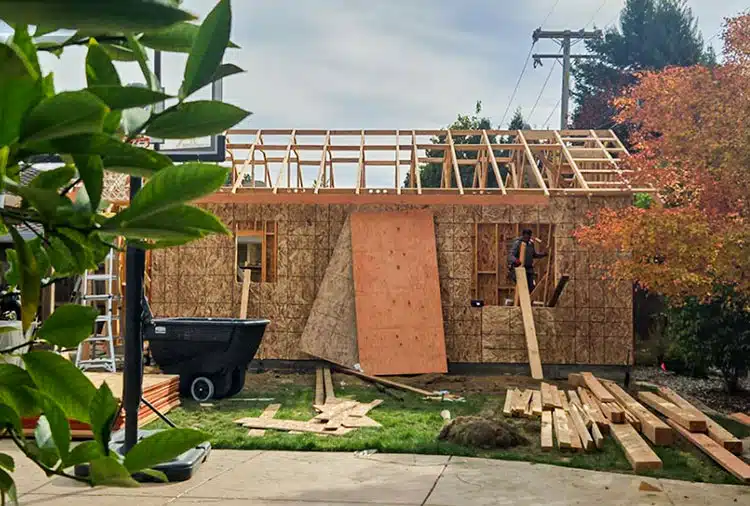
- Full design–build execution: foundation, framing, utilities, finishes.
- Choose tenant-friendly, durable finishes in the A+ showroom (or virtually) with guidance on lifecycle cost—not just how it looks on day one.
Step 5 – Hand-off Ready for Rent
- Walkthrough, punch list, and final inspections.
- You get a fully finished, code-compliant ADU ready for photos and rental listing.
- If you’d like, A+ can coordinate with real estate or property manager partners so you’re not starting from zero.
Is an ADU Right for Your Sacramento Property?
If you’re even a little curious, ask yourself:
- Do I have backyard space or a garage I’m not really using?
- Would $1,500–$2,500/month make a meaningful difference to my finances?
- Do I see myself in this home for at least the next 5–10 years?
- Would I benefit from more flexibility (family housing, a future downsizing unit, or a backup office/guest suite)?
If the answer is “yes” to even a couple of these, an ADU might be one of the smartest upgrades you can make.
 Your Trusted
Local Contractor
Your Trusted
Local Contractor
 Serving Communities Since 1997
 Copy Link
 Facebook
 Twitter
 LinkedIn
 WhatsApp